The Winners of the 2026 Media Literacy Ireland Awards
The winners of the 2026 Media Literacy Ireland Awards were announced on 11 November, 2026, at an exciting event kindly hosted by Virgin Media Television.
The winners of the 2026 Media Literacy Ireland Awards were announced on 11 November, 2026, at an exciting event kindly hosted by Virgin Media Television.
The aim of this award is to inspire and promote the development of projects and initiatives that help people develop media literacy skills, especially within communities. What was notable about this category was the variety of projects and how they were designed with very specific groups within society in mind. There were two national projects, one project from Cork, one from Kildare and one from Meath.
The judges for this category were Caroline Brennan (South-West Mayo Development Company), Irene Tinyiko Igiebor (Empower) and Joan O’Connor (Citizens Information Board).
There were five short-listed projects for this category. To learn more about each of the entries, and see what the judges said, take a look at this video.
The winner of the Best Community-Based Media Literacy Initiative was the Community Education Against Disinformation initiative by AONTAS.
Despite the high quality of all the short-listed entries, the project was the clear winner for all of the judges. They were particularly impressed with how innovative and well researched it was. They felt it included a very nuanced understanding of disinformation and took into account the deeper psychological and social drivers associated with it, such as values, frames, group identity, emotional narratives and algorithmic influence.
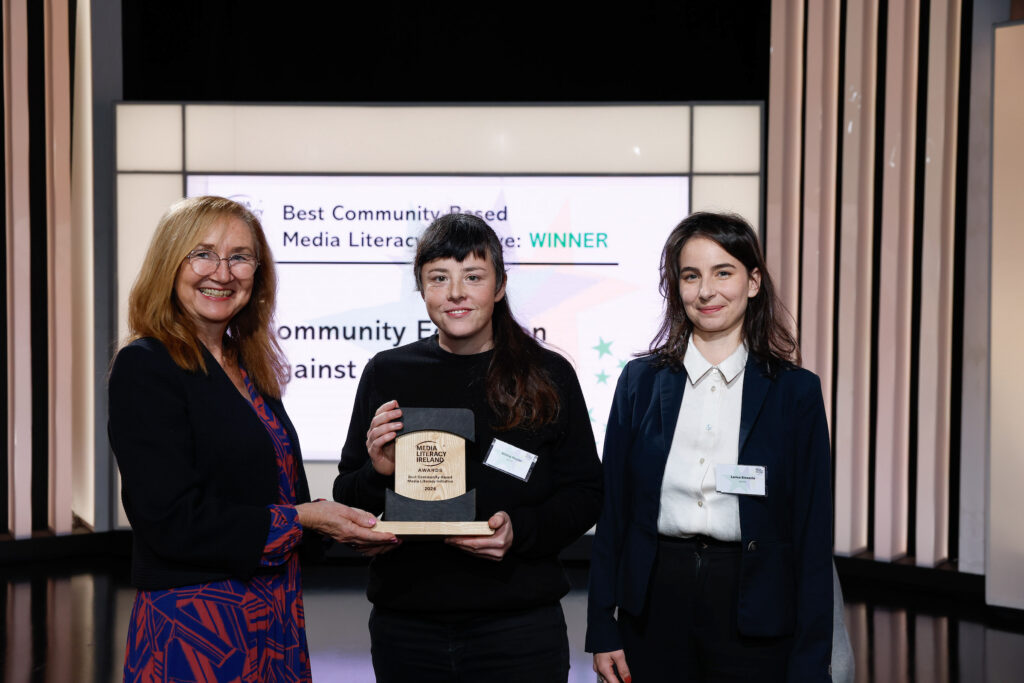
In particular, the judges recognised that through its different outputs (educational resource/practitioner workbook, the workshop programme, and the Community of Practice), this project had a strong ‘rippling out’ effect into the wider community, giving it a potentially huge reach. The judges were also impressed with the practitioner-led evaluation.
The aim of the Best Media Literacy Initiative for Older People is to inspire and promote the development of projects and initiatives that help empower people aged 65 and above, on the island of Ireland, to develop media literacy skills.
The judges for this category were Sinead Hanley (LWETB), Stephanie Comey (Coimisiún na Meán), Dr Waqar Ahmed (Dublin City University).
There were five short-listed projects for this category. The judges noted the prominence of AI as a theme, reflecting how media literacy interventions were responding to the needs of older citizens. They were impressed by the accessibility of these projects, as well as creativity and widespread engagement. There was also a strong emphasis on collaboration across this category. To learn more about each of the entries, and see what the judges said, take a look at this video.
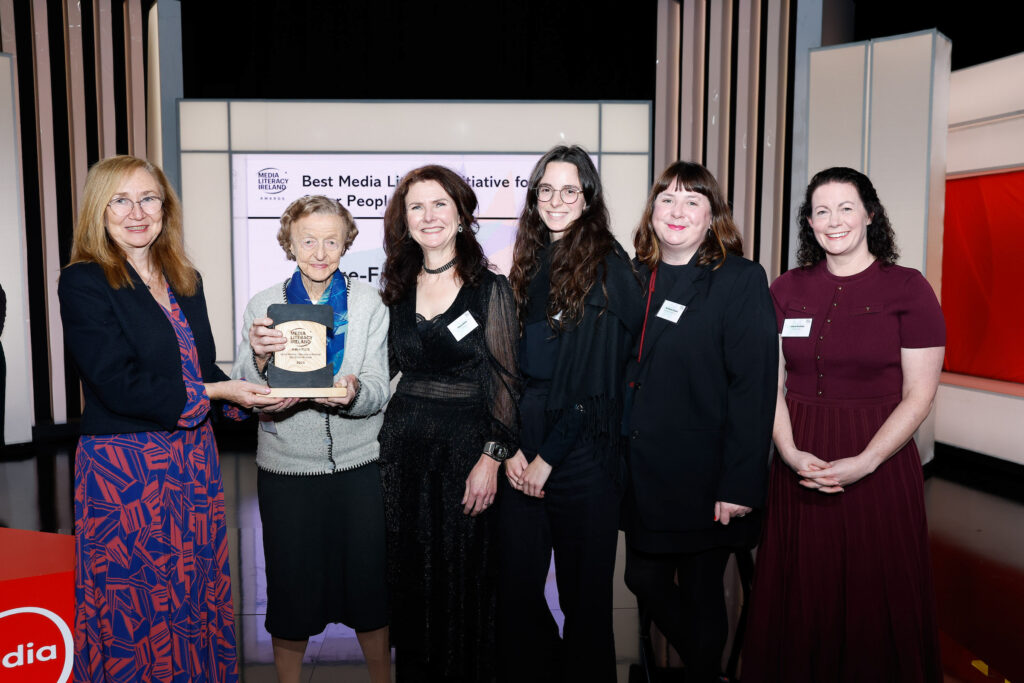
The 2026 winner of the Best Media Literacy Initiative for Older People Award was Age-Friendly AI by TU Dublin and the ADAPT Centre’s Education and Public Engagement team at DCU.
The judges all agreed that Age-Friendly AI is an outstanding national initiative that empowers older adults to engage critically and confidently with AI-driven media and services. They felt it successfully combined meaningful co-creation, strong community engagement, extensive partnership working, rigorous evaluation, and demonstrable impact.
The aim of this award is to inspire and promote the development of projects and initiatives that help empower children or young people under 18, on the island of Ireland, to develop media literacy skills.
The judges for this category were Caoimhseach Connolly (Breakfast News Presenter with Today FM), Dr Dónal Mulligan (Dublin City University), and Aliu Oluwasegun (The Fort Institute, Nigeria).
There were five short-listed projects for this category. Overall, this was an extremely competitive category with a significant number of entries. Although eventually whittled down to five, the high quality of the projects did not make judging this category an easy task. Empowerment through action was a strong feature of this category. To learn more about each of the entries, and see what the judges said, take a look at this video.
The 2026 winner of the Best Media Literacy Initiative for Young People Award was KidCast School Tour by Céire O’Donoghue.
What stood out for the judges in this project was the production-team model which gives every child defined roles, and how the participants were encouraged to generate ideas and suggest age-appropriate topics. By combining this kind of authentic broadcasting experience with fact-checking and source evaluation, the participants were treated as responsible media makers with agency, helping them to develop an understanding of how editorial choices shape what an audience receives.
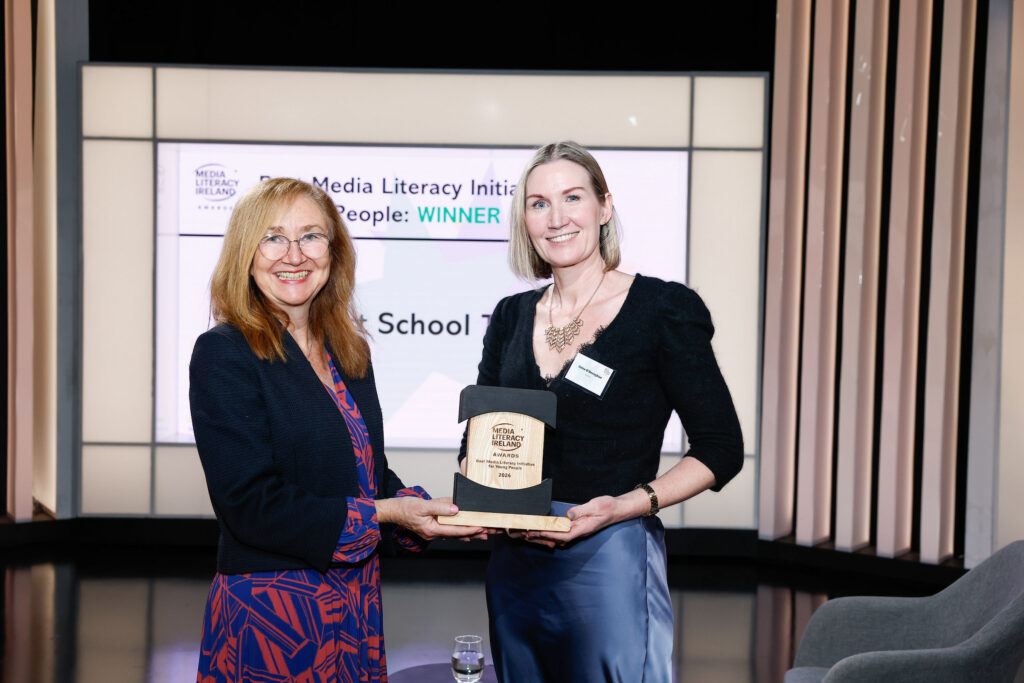
The judges also felt that this process developed the participants’ understanding of the multiple elements that contribute to the production of a final media broadcast or publication. The judges noted the practical, adaptive approach to inclusion that reached DEIS schools, Gaelscoileanna, refugee children and children with additional needs, and the video testimonials from the children showed they were highly engaged in the process. Overall, the judges felt that this project had the metrics, the traction as well as the potential to scale and to involve even more key stakeholders.
The aim of this award is to recognise media outlets, media professionals, and content creators who promote media literacy in an empowering and engaging way, to foster awareness of, interest in and engagement with media literacy.
The judges for this category were Dr Colm Kearns (DCU), Susan McKay (Press Ombudsperson), Teresa Hanratty (Learning Waves).
As we know, media literacy is a complex concept and media outlets and content producers can have their work cut out for them trying to communicate media literacy messages in a way that is engaging to broad audiences. These four short-listed projects are great examples of successfully doing that. To learn more about each of the entries, and see what the judges said, take a look at this video.
The 2026 winner of the Best Media-Led Media Literacy Initiative Award was The Youth Voice Series by Radio Kerry.
The judges said that this was a well-structured project with clear goals, outcomes and impact. What was particularly notable about it was how it evolved from a training project to become a mainstream programme. The judges loved how this project adopted a ‘Learning through doing’ approach that enabled a diverse and energetic group of young people to connect and communicate in a meaningful way with mainstream audiences. At the same time, it was able to foster connection, collaboration and creation of content for a real and lasting impact on the participants too.
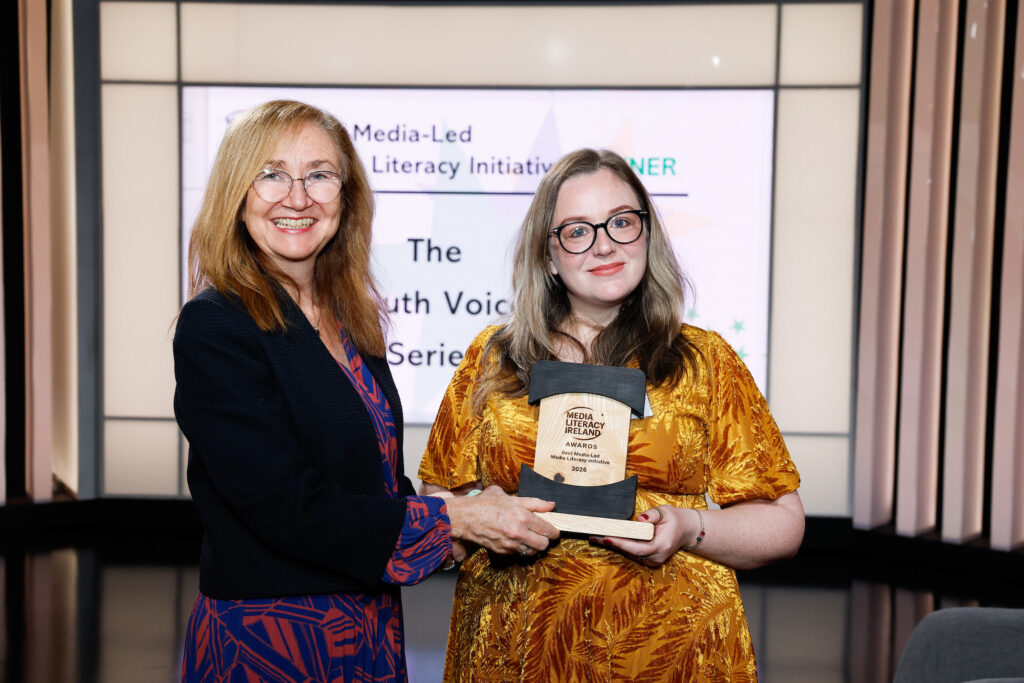
The judges were impressed by the coalition of partners assembled for the project, resulting in a genuinely community-based endeavour that allowed the unique perspective of youth voices to be heard, in their own words, by a substantial audience. Overall, the judges felt this was an excellent project that managed to both empower participants and educate listeners.
The aim of this award is to inspire and promote the development of a wide range of projects and initiatives that help empower people to develop media literacy skills. All kinds of activities were eligible including, but not limited to training, research, outreach programmes, projects, resources, advocacy, network-building, and funding.
The judges for this category were Dr Aisling Donnelly (South East Technological University), Deirdre Ryan (The Production People and Casting Ireland) and Emer Kelleher (Cork County Council Library and Arts Service).
The judges really did not have an easy job in this category. Not only were the projects very different, they were all of a very high quality. Evidence-based development, innovation and strong practical application were common themes across all these projects. To learn more about the five short-listed projects and what the judges had to say about them, take a look at this video.
The 2026 winner of the Best General Media Literacy Initiative Award was The Deepfakes / Real Harms initiative by University College Cork.
The judges felt that this project offers a fresh perspective on media literacy by encouraging audiences to critically assess manipulated content while understanding the human impact behind it. As an intervention-focused resource, it successfully combines awareness-raising, critical thinking and empathy-building, making it a valuable contribution to media literacy awareness. By incorporating a free, publicly accessible tool that promotes critical thinking, the judges believe that this is a very noble and innovative educational resource that is relevant to the public.
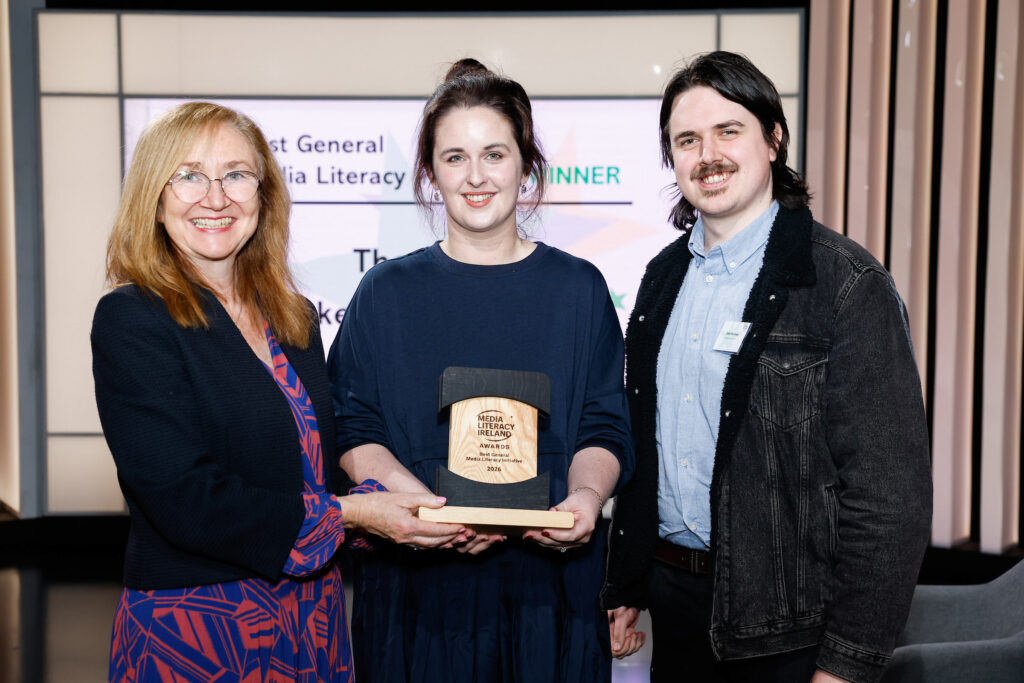
The judges were particularly impressed by the use of empathy-building, interactive scenarios and myth-busting elements to help drive behaviour change. A particular strength was the strong research foundation and the use of both qualitative and quantitative methods with a high-penetration sample. Overall, they felt that this was a project that could be a first-of-its-kind project with international appeal, designed to drive critical thinking and behaviour change in a difficult-to-reach audience.
The aim of this award is to recognise organisations and bodies that have strategically supported media literacy and invested significant time, support and/or funding to media literacy initiatives on the island of Ireland. This would include any media literacy initiative that was:
The judges for this category were Karolyn McDonnell (Léargas), Shaun Lavelle (Communications Strategist) and Susan Daly (Journal Media).
What was really striking about this category was the significance of the development of practical skills across all the projects, and that all these projects were targeting young people. To learn more about the five short-listed projects and what the judges had to say about them, take a look at this video.
The 2026 winner of the Best Large-Scale Media Literacy Initiative Award was Media Literacy Activities for Children and Young People in Northern Ireland by Nerve Centre.
The judges felt that this project stood out as an exceptionally strong submission that demonstrated excellence across all key criteria and could be a model for other media literacy programmes. What distinguished this initiative was its cohesive end-to-end approach ensuring that learning progresses meaningfully from awareness to critical analysis and practical application. Equally noteworthy was the genuinely student-centred design, with a clear goal of empowering young people as active participants in their own learning, while extending impact beyond the classroom through engagement with families, schools and community organisations.
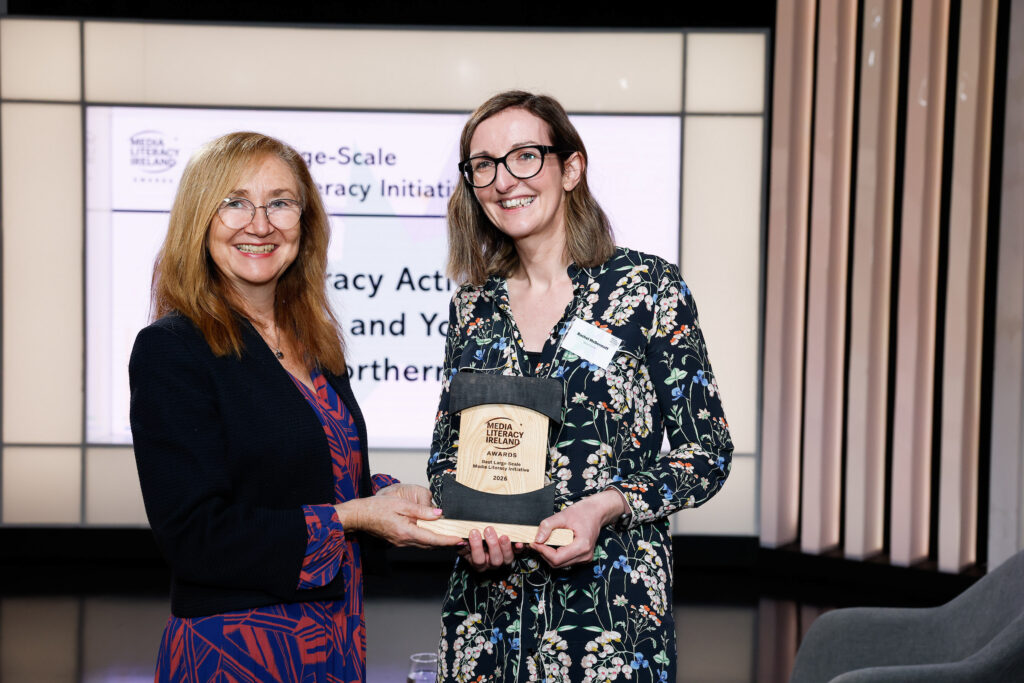
The project also demonstrated a thoughtful balance of creativity, critical thinking, inclusion and evidence-informed model that is not only educationally robust but also scalable, relevant and responsive to the realities of young people’s digital lives. Overall, the judges felt that this project represented an excellent example of what high-quality media literacy education can achieve when pedagogy, partnership and purpose are aligned.
There was one additional award presented at the event. This is not an award that can be applied for, neither is it an award that is presented every year. Recipients are chosen by the Co-chairs and the National Coordinator to publicly recognise a person or an organisation that MLI believes has gone above and beyond to help promote media literacy in Ireland.
This year, the award went to Virgin Media Ireland in recognition not only of consistent support it has provided to MLI since it was established in 2017, but also because of their commitment to empowering people with media literacy skills in their output.
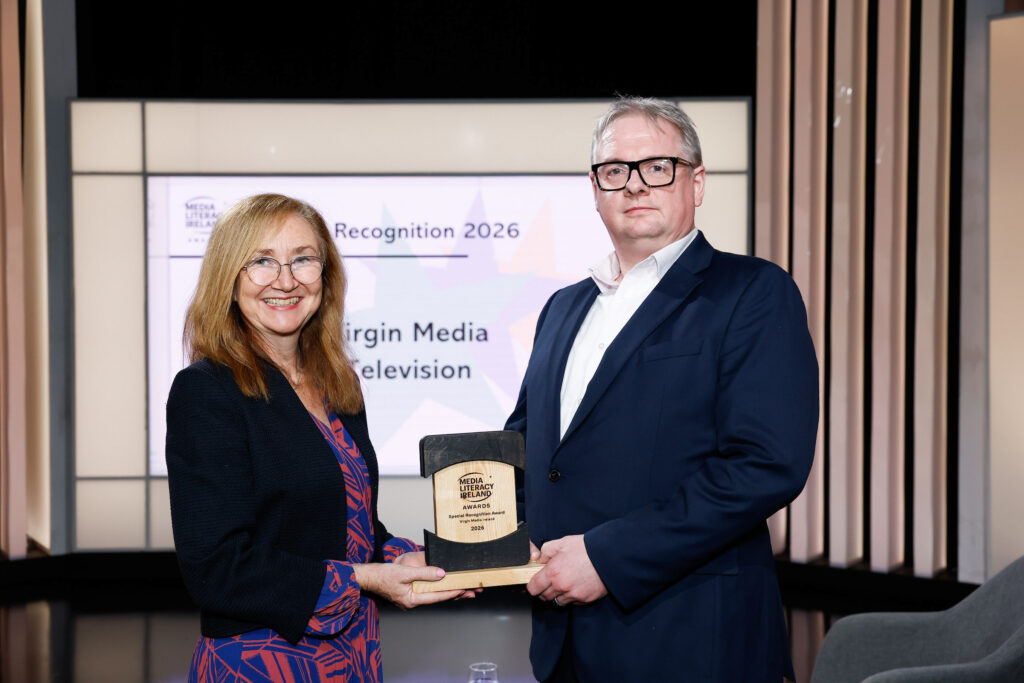
For 10 years Virgin Media Ireland has been quietly and steadfastly supporting the work of MLI. They were founding members of MLI in 2017 and have been represented on the Steering Group for many years.
They were champions of the Be Media Smart campaign, opening up their channels to us for both advertising and editorial. They hosted the very first MLI conference, and they have hosted the MLI Awards for three consecutive years now.
Virgin Media News journalists help audiences recognise and navigate misinformation and disinformation with the Truth Matters strand and media literacy topics are regularly highlighted in the news and current affairs output.
Media literacy related content is also very apparent in the 2026 autumn schedule with programmes such as Deepfake Ireland, Toxic Threads and Strangers – which all help to raise awareness of the importance of media literacy skills.
As the judging took place, the judges felt strongly that a small number of projects deserved special recognition in the form of a Highly Commended award.
In some cases, these projects were very, very close to the category winner, but not in all cases, so it is important to note that these are not ‘second place’ awards, but an acknowledgement of the project having something special, something unique, that makes it stand out.
The recipients of the 2026 Media Literacy Ireland Highly Commended awards, in alphabetical order, were…
The judges felt this project represented an outstanding national initiative that demonstrated excellence across empowerment, innovation, inclusion, collaboration and impact, and successfully helps older adults develop the critical media literacy and cyber resilience skills needed to participate safely and confidently in digital life.
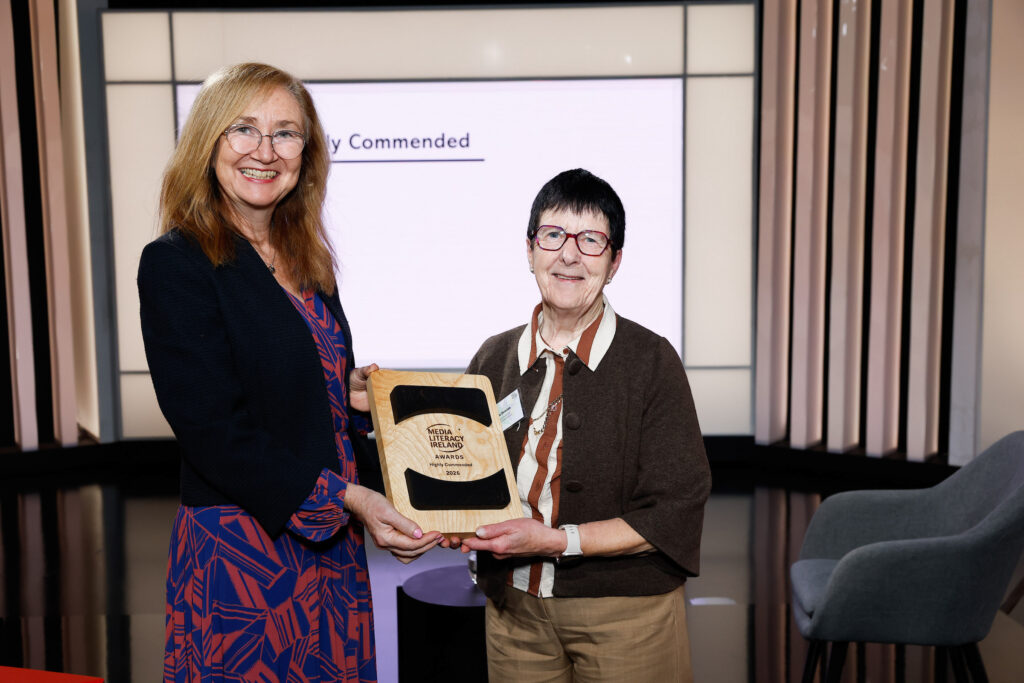
Its co-design approach, extensive reach, strong evidence base and sustainable train-the-trainer model make it a leading example of best practice in media literacy for older people.
The initiative delivers clear behavioural impact and substantial national benefit. The judges particularly liked the card game and the Cyber Safety Champions programme which had the potential to extend the learning in local communities.
The project scored particularly well on empowerment and the judges really liked how it used a participant-centred, learning-by-doing approach within an editorial framework that included a creative and innovative ‘Test and Reflect’ element for the participants.
The project encompassed a rich and varied understanding of media literacy and demonstrated how a project could address a broad range of media literacy skills. The judges were impressed by the innovative pedagogy which combined practical broadcast production skills with critical reflection and public education in the same process.
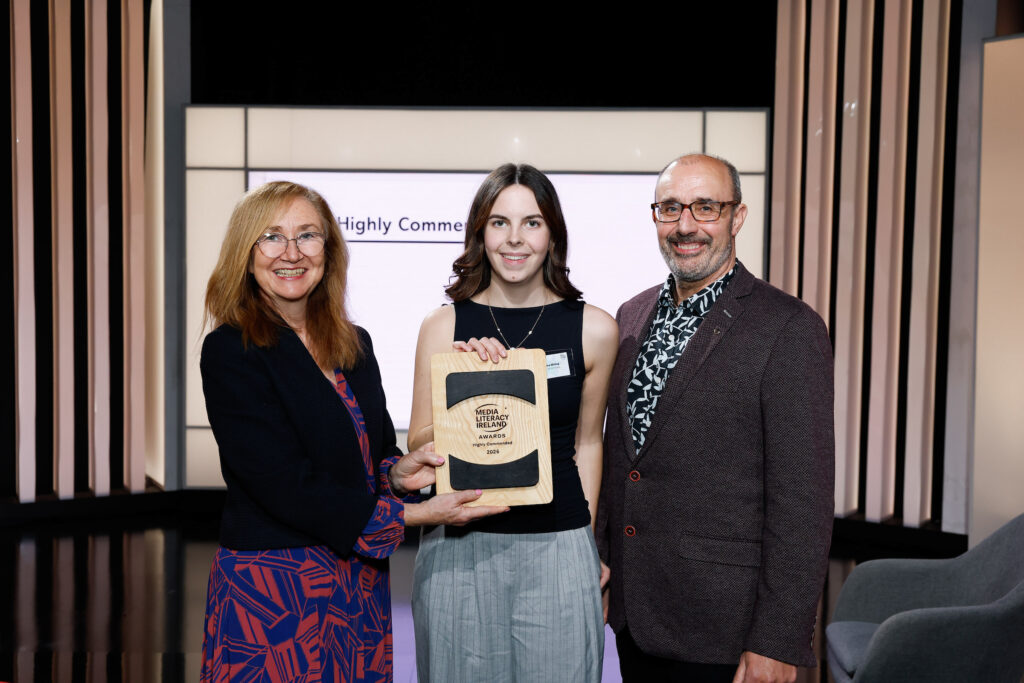
It was clear that the participants had a robust and valuable learning experience, with practical experience of researching, questioning and creating media themselves. An impressive range of expert contributors were involved and the judges also noted how the project also helped the wider public to understand how media attract attention, shape belief, distribute power and influence behaviour. The judges also applauded the model of distribution to the wider sector and thought it could be used as a model for similar projects.
The judges felt that this project represented a strong community-based media literacy initiative that addresses the needs of older adults in navigating today’s digital information environment.
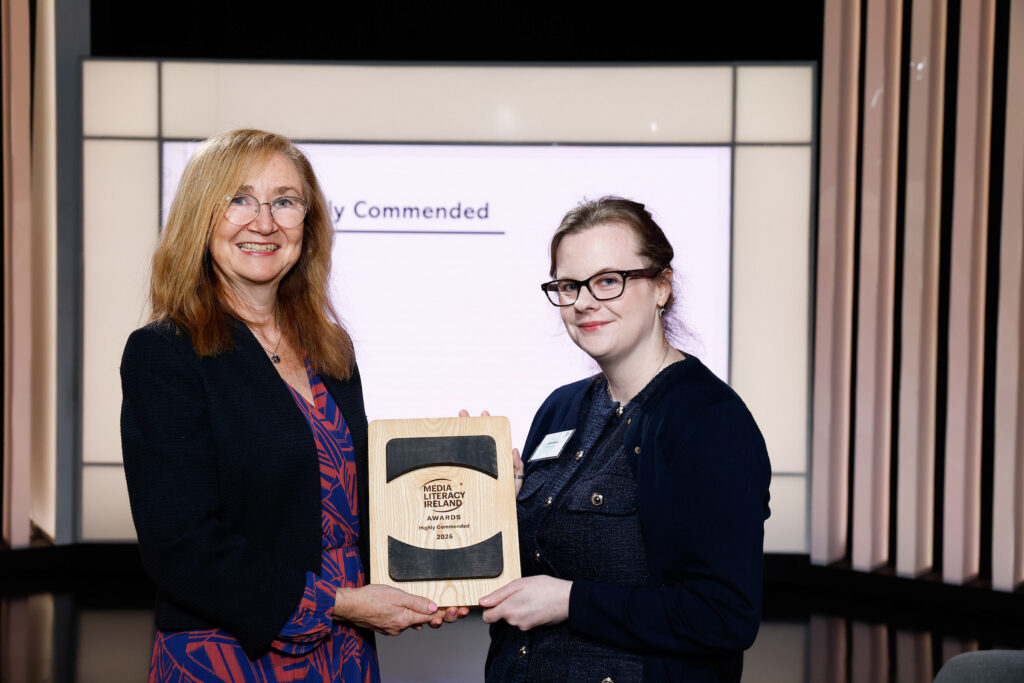
The project effectively promotes critical thinking, fact-checking and online safety through accessible workshops, trusted library settings and high-quality supporting resources. The evidence of staff development, curated media literacy displays and partnership activity demonstrated collaboration and impact.
Overall, the judges felt this was a great example of a meaningful and very accessible local initiative that addresses the media literacy needs of older adults through public libraries.
The judges felt that this was an important resource that demonstrated a strong commitment to empowerment, inclusion, and collaboration.
Of particular note, was the inclusive and co-creation design process that resulted in an interactive online course providing an accessible and scalable approach to building critical thinking, information evaluation, and responsible digital engagement.
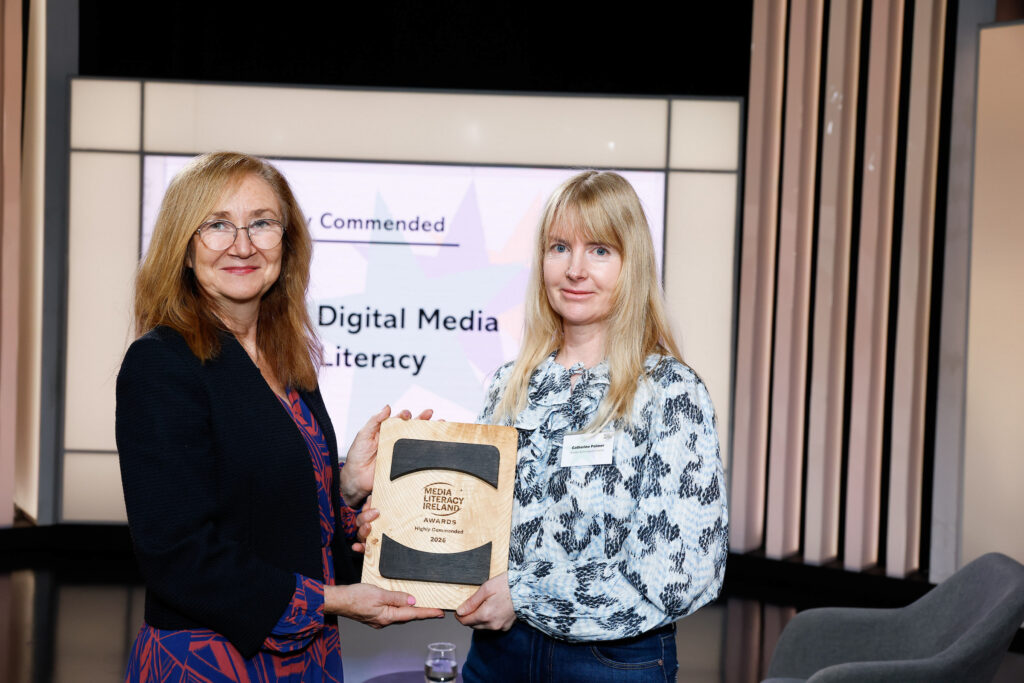
The language used in the videos was clear and simple making it effective, accessible, and easy for everyone to understand. The judges recognised that elements of the course have the potential to be adapted and extended beyond its academic setting, supporting the development of media literacy and critical thinking skills among a wider audience. This scalability and broader applicability enhanced the project’s value and impact.
Overall, the judges felt that this was a very impressive and thoughtfully developed initiative that is suitable for use across a range of environments and audiences.
The judges wanted to recognise this project because of the potential it has to remind users of the extent and pervasive influence that media has on behaviour.
This project underlines the importance of critical thought, not simply being passive consumers of content but questioning the messages, legitimacy and source of content. This is so important when the content in question is harmful, and when those exposed to that content may be particularly vulnerable to it.
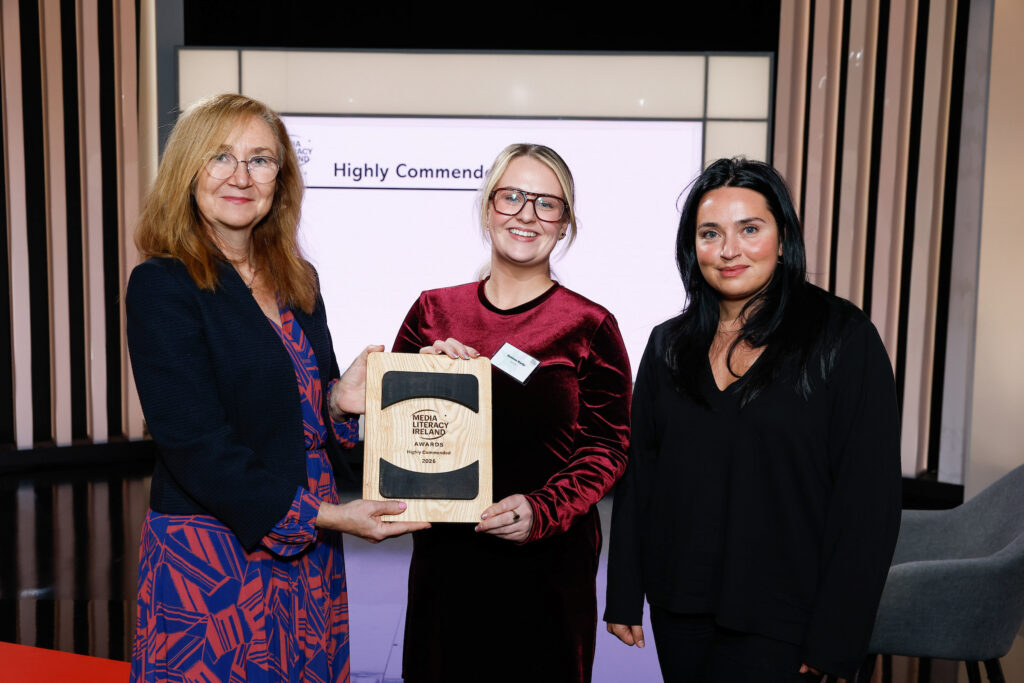
The judging panel felt that this project has the potential to make a significant impact by opening difficult conversations, and they look forward to seeing how the project might evolve to measure and track impact at every stage in order to achieve its full potential.
The judges wanted to recognise this project because of the unique way it evolved from simple beginnings into something so impactful for those involved. They really liked that this was a participant-led initiative and felt that its co-design and collaborative approach enhanced both its authenticity and effectiveness.
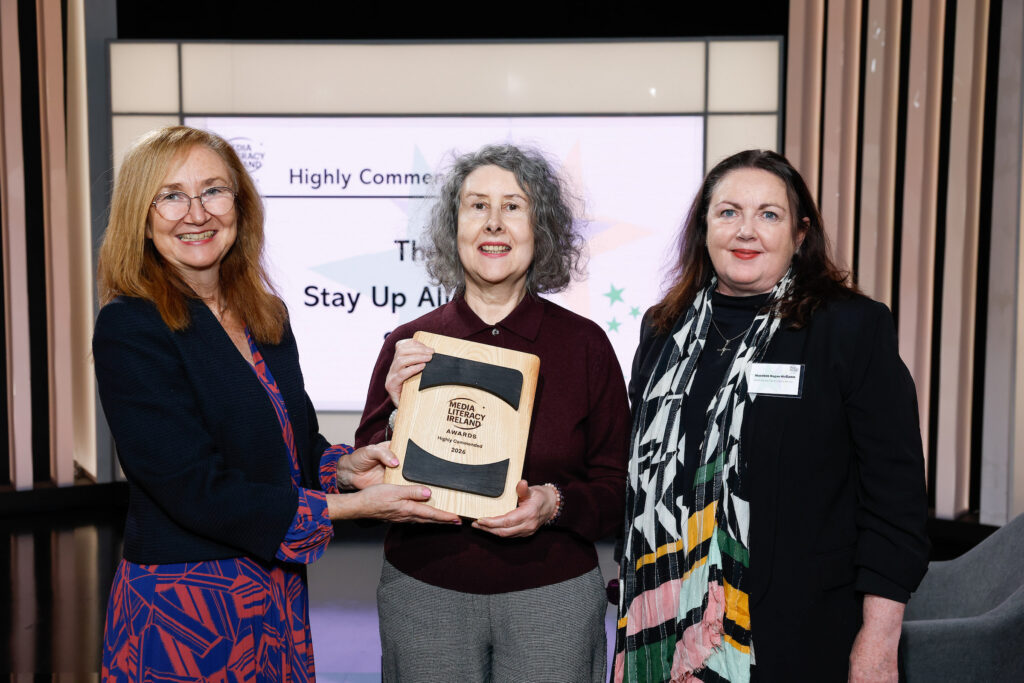
They noted that it demonstrated a strong commitment to inclusion, empowering adults with intellectual disabilities through the development of critical thinking and media literacy skills in a practical and meaningful way.
We are, of course, talking about Geraldine, if you and the team want to come down and accept your award from Aoife.
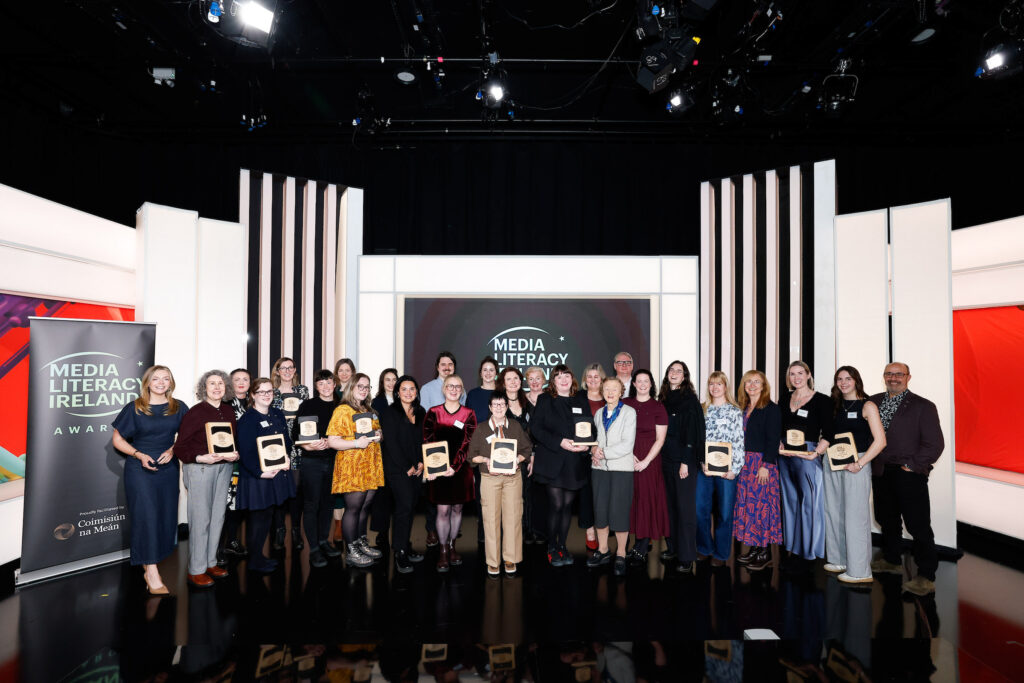
The winners of each of the five award categories received a beautiful trophy, and each of the Highly Commended projects received a beautiful MLI Awards wall plaque. Designed and hand-crafted by Cian Magill of Magill Woodcraft Ireland, the design is based on an abstract representation of an enlightened eye – symbolising the power within, that can be achieved with persistence and inner belief. It is also inspired by the concept of awareness, critical thinking, and one’s motivation to make a positive difference in the world.
Take a look at the winners from previous years: