On 26 November 2025, the Media Literacy Ireland Conference took place in the Clayton Hotel, Ballsbridge, Dublin, and was attended by more than 90 participants, including 25 speakers and panellists. The theme of this year’s conference was ‘Media Literacy – Supporting communities, fostering citizenship, promoting democracy’ and the event provided an opportunity for networking, connection and the exchange of ideas across the media literacy community. A broad range of sectors were represented by the over 90 attendees from across the country, and MLI was also delighted to welcome international speakers from Germany, Ukraine and Moldova who brought their unique perspectives to the topics under discussion. Seven members of the Webwise youth panel were also in attendance, providing valuable insights into the views of young people.
Opening remarks
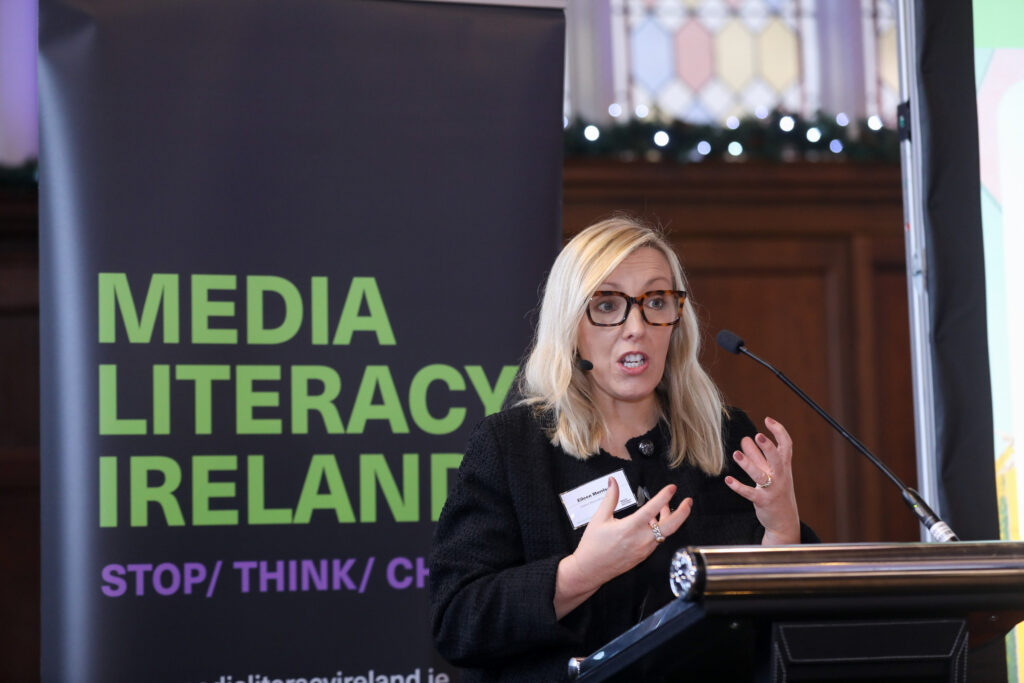
The MC for the day was Eileen Morrissey, Wexford Country Librarian and former President of the Library Association of Ireland, who expertly guided attendees through a packed agenda of speakers, panels and group discussions.
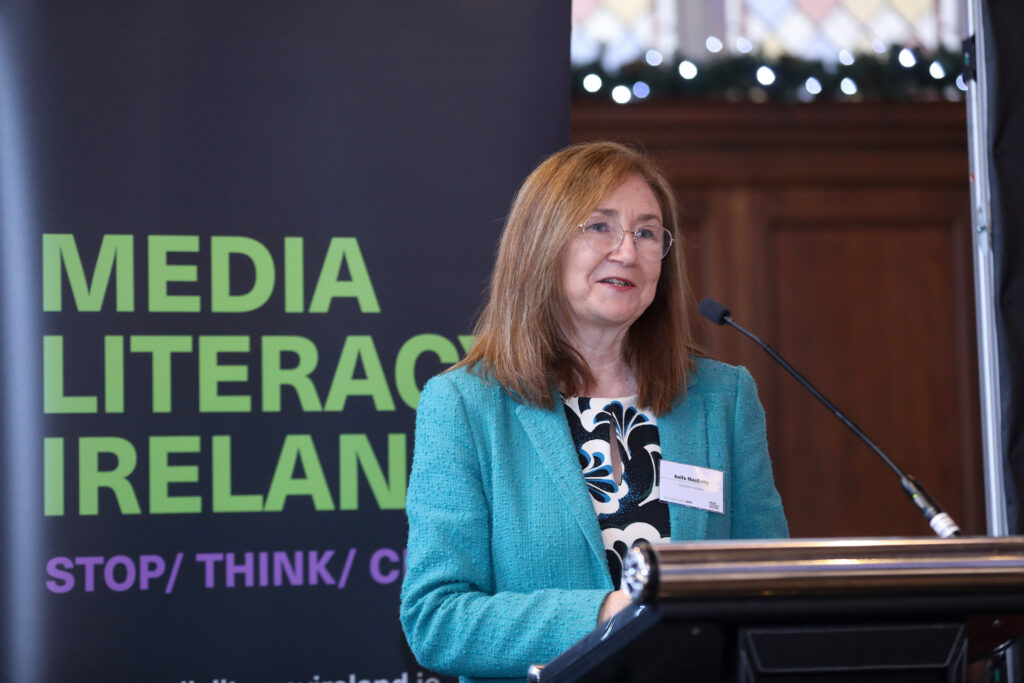
Opening remarks were made by Aoife MacEvilly, Coimisiún na Meán’s Commissioner for Broadcasting and Video on Demand, who took the opportunity to highlight the critical importance of media literacy as an essential life skill and as a key delivery tool in Coimisiún na Meán’s organisational strategy. Aoife also noted the impact and success achieved by Media Literacy Ireland, its work in partnership with on-the-ground networks and the acknowledgement of its crucial role within multiple national strategies, alongside international recognition.
MLI review and keynote speech
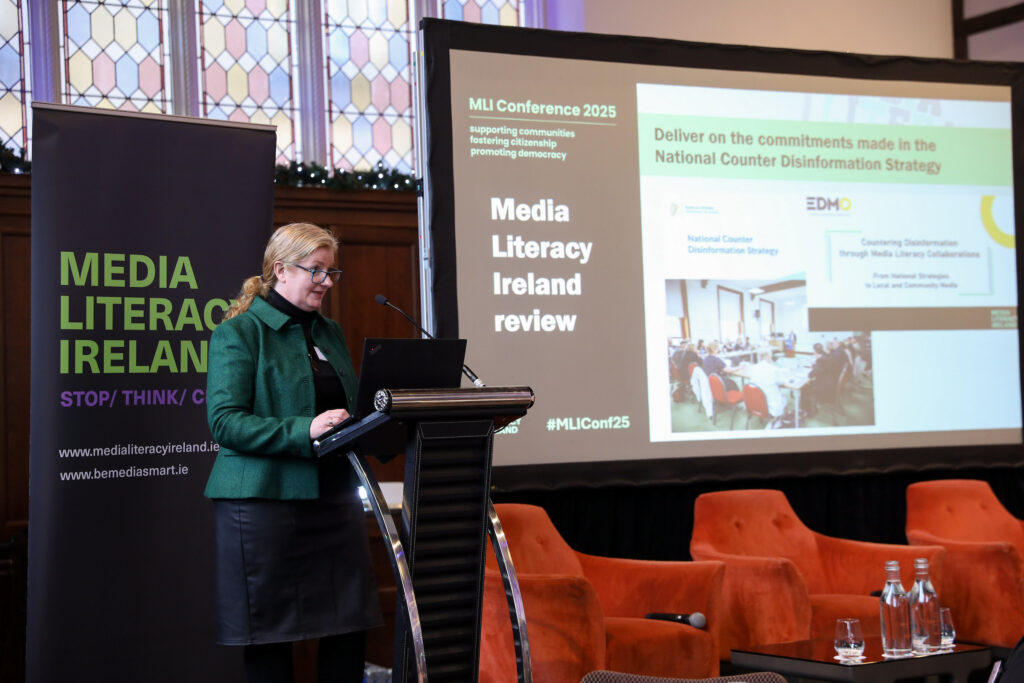
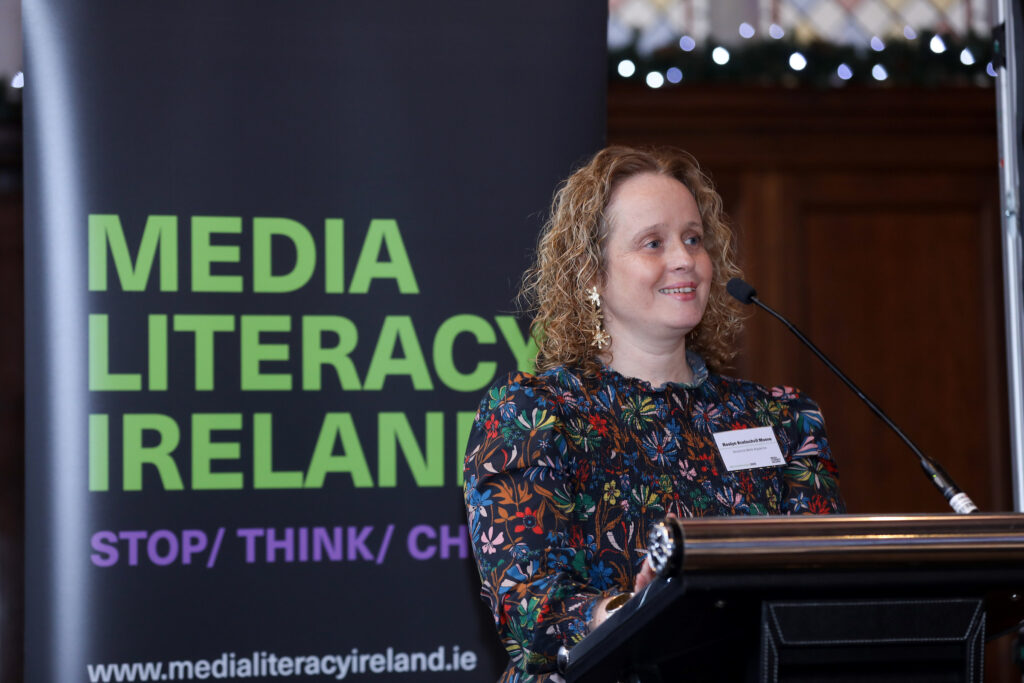
MLI’s National Coordinator, Martina Chapman, provided a summary of the achievements of MLI in the last twelve months, in line with the strategic goals set for MLI. This was followed by an inspiring keynote speech from Roslyn Kratochvil Moore of Deutsche Welle Akademie. Entitled ‘Democracy’s Missing Infrastructure: Why Community Media Literacy Matters’, Roslyn drew on her experience of delivering media literacy projects in 23 countries and spoke passionately about the need to meet people where they are and the importance of making media literacy engaging and entertaining.
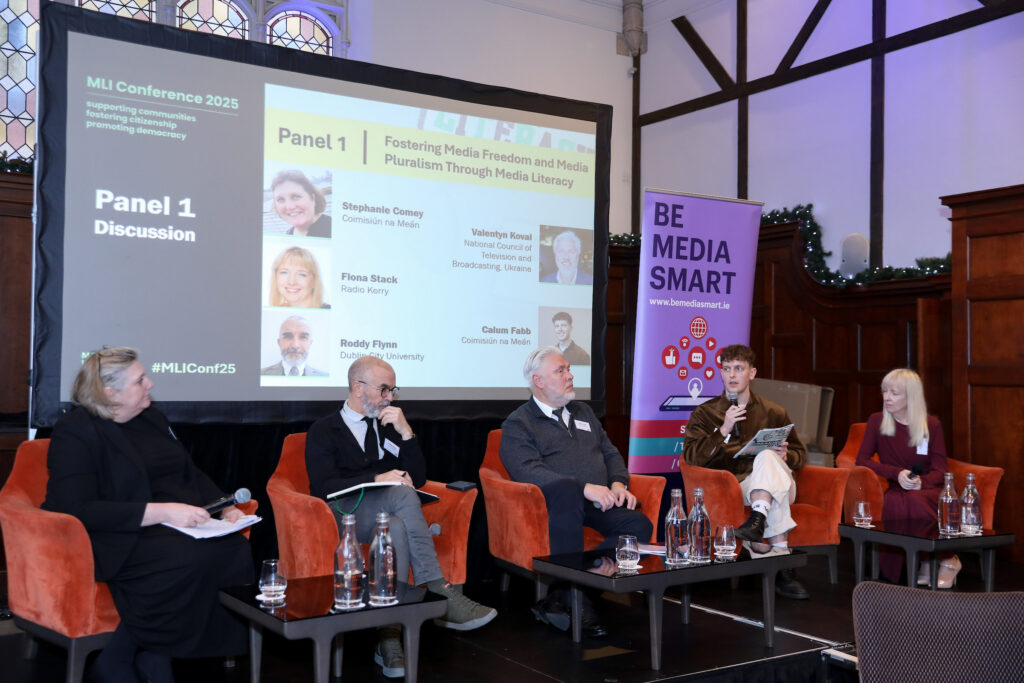
Panel 1: Fostering Media Freedom and Media Pluralism through Media Literacy
The first panel of the day explored how media literacy could foster media freedom and media plurality. Convened in collaboration with Coimisiún na Meán, Aoife MacEvilly set the context by outlining the importance of media freedom and media pluralism in safeguarding democratic processes, the risks and challenges currently faced and how media literacy skills underpin the protection of media freedom and media pluralism.
Moderated by MLI Co-chair and Director of Media Literacy and User Education at Coimisiún na Meán Stephanie Comey, the panel considered the role and responsibilities of media, media regulators and audiences in using media literacy to promote media freedom and media pluralism. The panellists were Fiona Stack, CEO of Radio Kerry Group; Dr Roddy Flynn, Associate Professor at the School of Communications, DCU; Valentyn Koval, Deputy Chair of the National Council of Television and Radio Broadcasting, Ukraine; and Calum Fabb, Assistant Director of Regulatory Policy at Coimisiún na Meán.
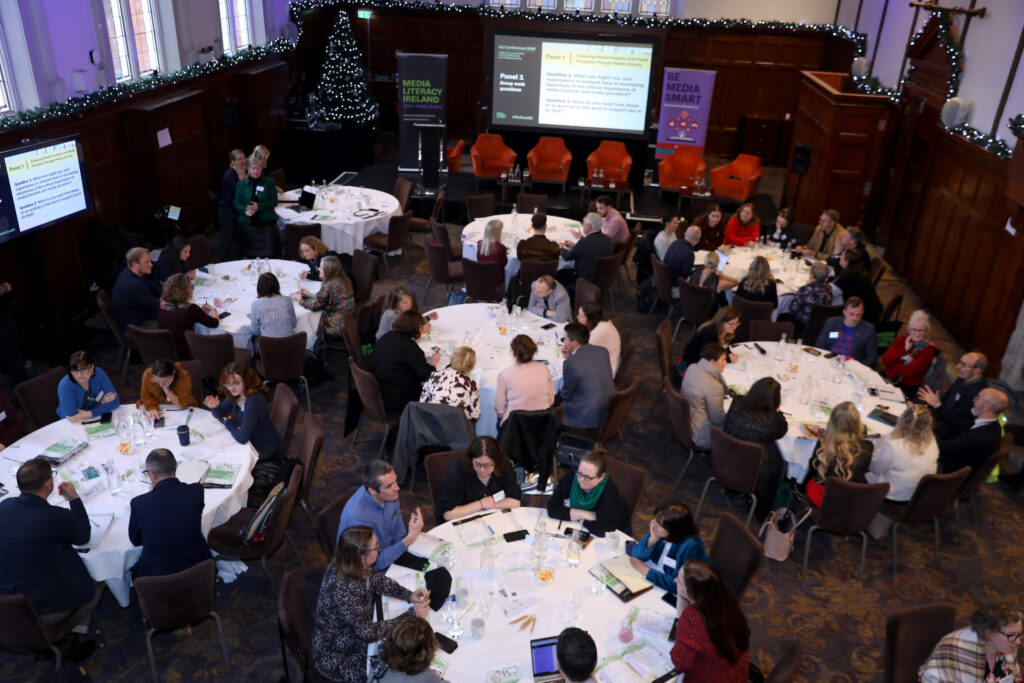
Following the panel discussion, attendees participated in facilitated discussions at their tables, the outputs of which shaped the final review session of the day.
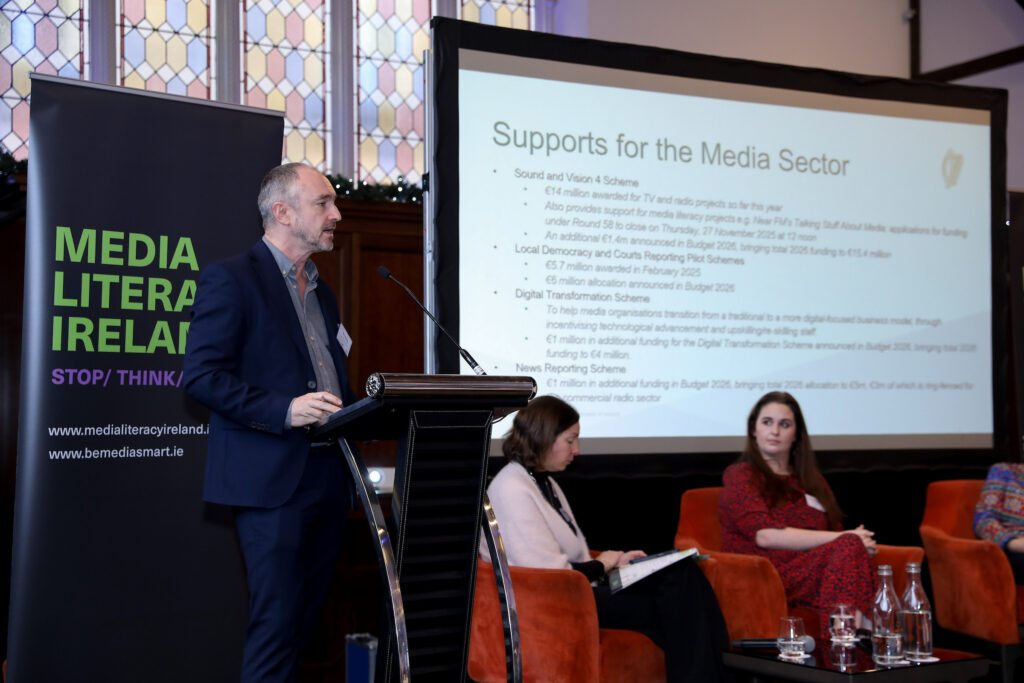
Panel 2: Promoting Information Integrity: Rising to the Challenge
The second panel was convened in collaboration with the Department of Culture, Communications and Sport. It considered media literacy actions that are being undertaken as part of Ireland’s recently published National Counter Disinformation Strategy (NCDS) and how a national, coordinated approach can promote information integrity. Paul Kilkenny, Senior Policy Analyst at the Department of Culture, Communications and Sport set the context for the panel by outlining the purpose and actions of the NCDS. Dr Eileen Culloty, MLI Co-chair and Associate Professor at DCU’s School of Communications, moderated thediscussion with panellists Lilana Vitu, Chair of the Audiovisual Council of Moldova; Dr. Stuart Hamilton, Head of Libraries Development in the Local Government Management Agency; Dr. Gillian Murphy, Senior Lecturer in Applied Psychology at the University of Cork; and Susan Daly, Managing Editor of Journal Media. A stand-out moment of the day was the description of how the Moldovan regulator effectively combatted Foreign Information Manipulation and Interference (FIMI) during their recent General Election.
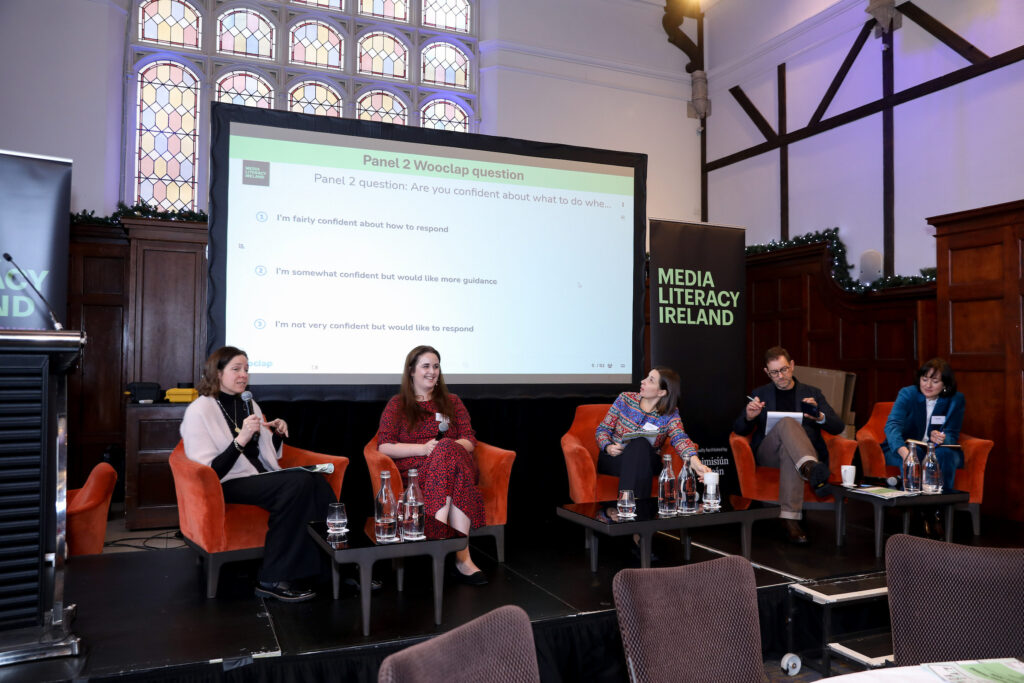
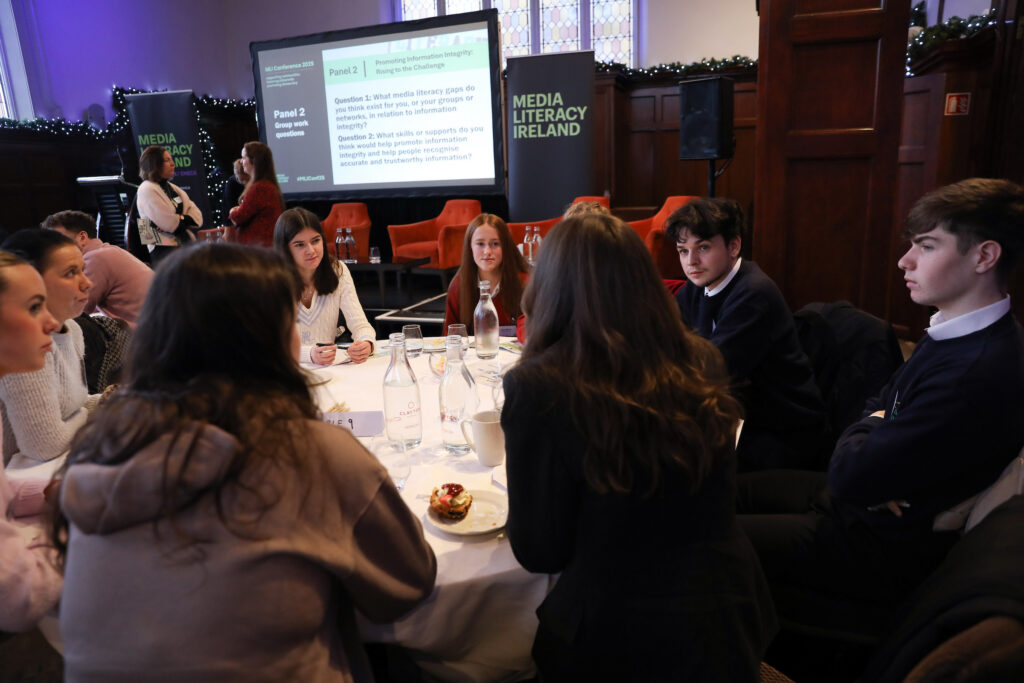
Following the discussion, attendees again participated in a facilitated group work at their tables, with a Webwise youth panellist taking the mic to make insightful observations about the impact of algorithms potentially limiting the content that users access online and the negative impact this has on full and rounded debates.
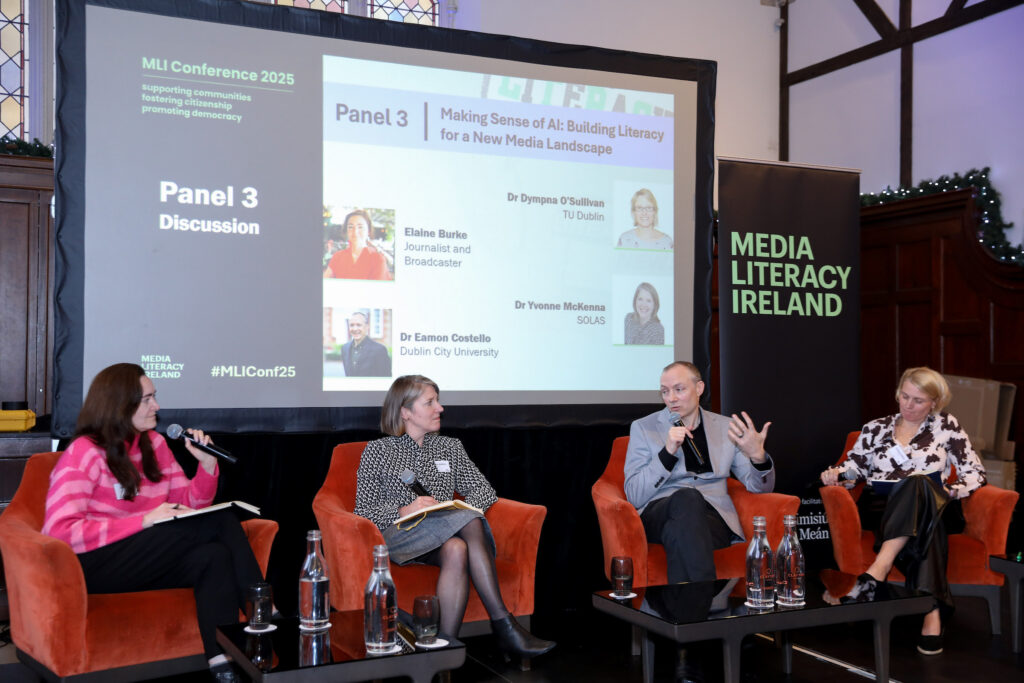
Panel 3: Making Sense of AI: Building Literacy for a New Media Landscape
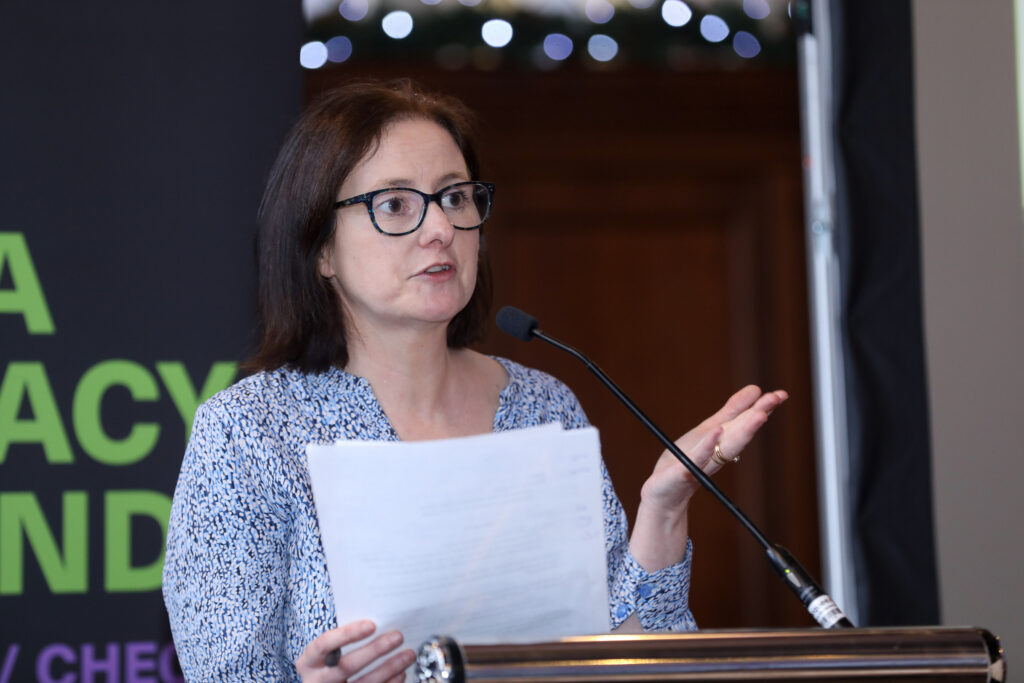
After lunch, the third panel was convened in collaboration with the ADAPT Centre. The session considered how to equip people with the AI literacy skills to critically engage with AI-driven media and how to empower different audiences to harness AI’s benefits while navigating its risks. Dr Cara Greene, Education and Public Engagement Projects Lead at ADAPT, provided the context setting for this panel, which was moderated by journalist and broadcaster Elaine Burke. Offering their perspectives and experience in the AI space were panellists Dr Eamon Costello, Associate Professor of Digital Learning at DCU; Dr Dympna O’Sullivan, Academic Lead of the Digital Futures Research Hub at TU Dublin and Dr Yvonne McKenna from Adult Literacy for Life Programme in SOLAS. Following the format of the other two panels, attendees considered what media literacy gaps exist in relation to AI and what tools and approaches could work in promoting AI literacy during the group work session. A Webwise youth panellist highlighted key aspects of their discussion, including the need to be sceptical when consuming media and taking a minute to pause and think about the content. The need to publicise the valuable resources provided by libraries and for more education on fact-checking was also highlighted, along with a recommendation to make digital media literacy training mandatory in schools.
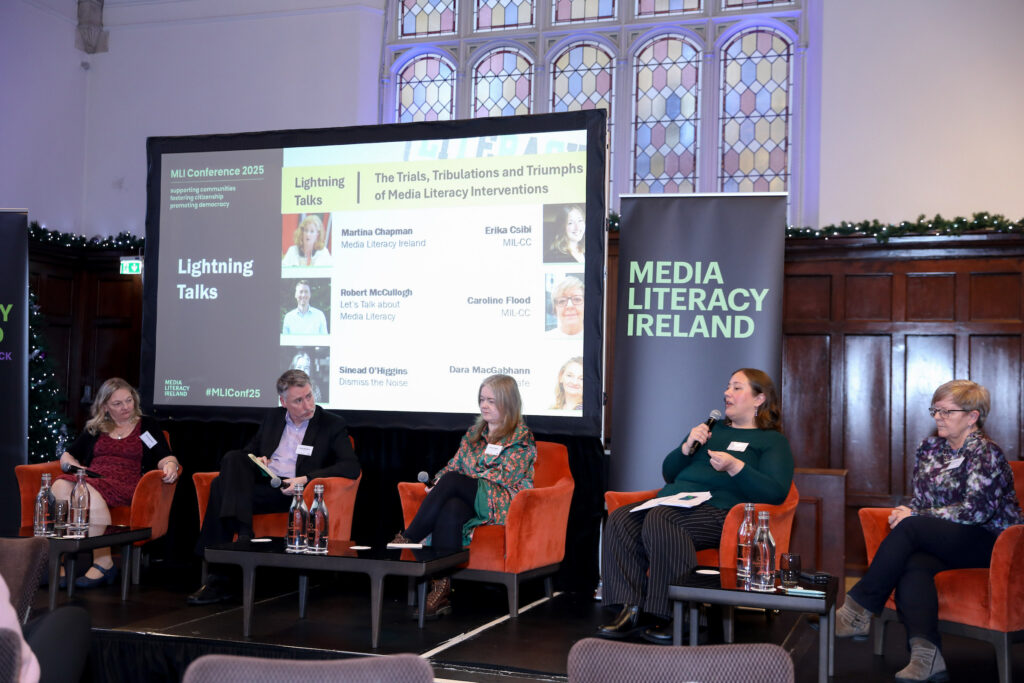
Lightning Talks: The Trials, Tribulations and Triumphs of Media Literacy Interventions
There was a distinct shift from theory to practice for the final panel session of the day when practitioners showcased four very different media literacy projects. Moderated by Martina Chapman, the session started with a series of very short presentations which provided an overview of each of the projects.
Dara MacGabhann presented the Smart Café project which received a Highly Commended Award in the MLI Awards this year. This project was specifically designed to engage and support older people to develop digital skills and confidence through a combination of semi-structured learning and ongoing, informal support via a cafe-style drop-in centre.
Robert McCulloch from SOLAS presented the national ‘Let’s Talk about Media Literacy’ national campaign that was run by the Adult Literacy for Life office. Robert emphasised the importance of working in collaboration, especially for large national projects.
Sinead O’Higgins from Waterford Libraries outlined the Dismiss the Noise conference which also received a Highly Commended Award in this year’s MLI Awards. Sinead explained how the conference engaged over 400 young people from the Southeast. Reflecting comments made in the keynote, she emphasised the importance of making media literacy fun and making it local.
Finally, Caroline Flood and Erika Csibi from Dún Laoghaire-Rathdown public library service spoke about their DLR Media Literacy Programme, which originated as part of the Media and Information Literacy Community Connections project. Caroline and Erika outlined a range of innovative approaches that they were taking to help fellow librarians develop the skills and confidence to embed media literacy learning right in the heart of their community.
Following the presentations, there was an illuminating discussion on the highs and lows of delivering these initiatives in the community and the valuable lessons learned.
Conference reflections
In the Reflections session, Stephanie Comey and Roslyn Kratochvil Moore again took the floor to review the key points that had come through the group work sessions during the day. Common themes in response to Panel 1’s discussion of media freedom and media pluralism centred around improving the public’s understanding of what media freedom and media pluralism are and why they are so critical to a functioning democracy, making the topic more accessible by working at local level where trust is high, and helping people understand that regulation is not censorship.
The feedback from the Panel 2 group work session highlighted the difficulty of conveying complex information in simple language and reaching the groups who need reliable information most. There were also calls for access to more experts and resources. The discussions on AI revealed consensus that the rapid evolution of Generative AI has resulted in concerns about keeping up to date with the technology and its potential impact on multiple aspects of life. There were calls for more regulation and guidance on the use of Generative AI and the development of games, quizzes and other engaging methods as training resources.
Final remarks
Co-chair of MLI Eileen Culloty recalled the origins of Media Literacy Ireland and reflected on the growth in reach and impact of the organisation since its inception in 2017. She thanked all those involved in MLI for their ongoing support, especially Martina Chapman for her role as National Coordinator and Stephanie Comey and the MLUE team at Coimisiún na Meán for their funding and facilitation of MLI.
Eileen also thanked Coimisiún na Meán, the ADAPT Centre and the Department of Culture, Communications and Sport for co-convening the panel sessions, along with all of the speakers, panellists, and attendees for making the 2025 event such a success.