By Ryan Meade, Government Affairs & Public Policy Manager, Google
A highlight of every year for Google’s Dublin HQ is serving as the global stage for the Growing Up in the Digital Age summit. This flagship annual event, hosted by the Google Safety Engineering Centre for the fourth time this March, convened over 220 guests from more than 27 countries—including safety experts, policymakers, NGOs, and researchers—to advance a critical mission: supporting and empowering young people to have safer experiences in the online world. It also saw the launch of a major teen wellbeing and digital literacy initiative from Google.org and YouTube.
As Mindy Brooks, Google’s Vice President of Kids & Families, noted during her keynote, the core objective is to protect kids in the digital world, not from the digital world. The public debate often frames digital restrictions as a primary solution for youth safety. Yet research shows that young people want guidance and balance — a perspective shared by global rights and safety groups. This blog by Mindy Brooks reinforced strong default protections for under-18s; empowering parents; redefining high-quality, age-appropriate experiences; and risk-based age assurance.
The focus of the sessions – keynotes, panel discussions, breakouts and workshops with Google and external experts, regulators, campaigners and teens – was on specific, actionable solutions to systemic issues. This includes continuously redefining baseline protections such as SafeSearch on Google Search and “Take a Break” reminders on YouTube, supplemented by strict guardrails for generative AI tools. Empowering parents with customisable controls such as Family Link and an industry-first “zero-timer” for YouTube Shorts. And developing smarter and safer age assurance with “Zero-Knowledge Proof,” allowing users to verify their age without sharing sensitive personal data.
A headline announcement from the summit was the launch of a $20 million global initiative for teen digital wellbeing by YouTube and Google.org. Informed by a comprehensive study of 9,500 teens, this funding will power a first-of-its-kind multilingual resource centre and curriculum. The initiative is designed to help young people navigate digital stress, understand their online habits, and interact with AI in healthy, resilient ways. You can read more about this global initiative here.
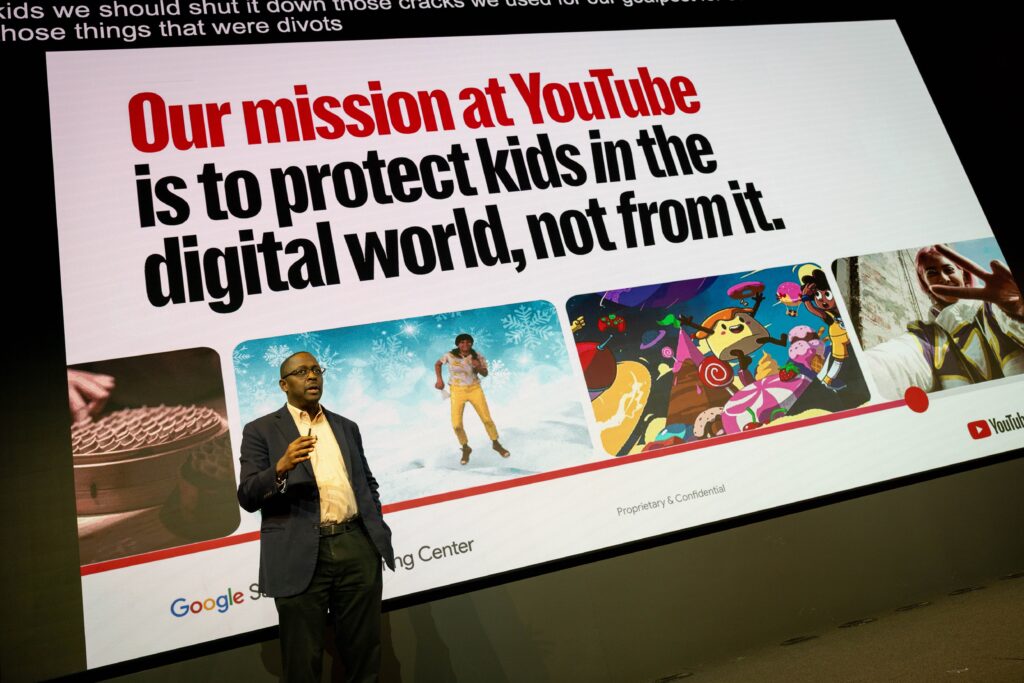
“We have to be very thoughtful about unintended consequences even when we have the best intentions… we don’t want to take away the tools that would allow them to continue to improve.” — Dr. Garth Graham, Global Head of YouTube Health
The summit also debated the growing calls for blanket social media bans. A strong consensus emerged among experts and regulators that absolute bans for minors are often counterproductive. Such restrictions risk pushing young people into unregulated, “darker” corners of the internet where parental controls cannot reach. Instead, the summit advocated for digital resilience. Dr. Garth Graham, Global Head of YouTube Health, warned that restrictive legislation could strip away the very tools youth use to learn, while a Swedish teen panelist powerfully shared that safety should not be a “checkbox” but the “soil” in which humanity grows.
By grounding high-level policy debates in the real-life experiences of families, creators, and “Trusted Adults,” the summit showed that the path forward is a collaborative one. By working together with parents, experts and especially young people themselves, we believe that it is both possible and necessary to help the next generation learn, grow and thrive online.