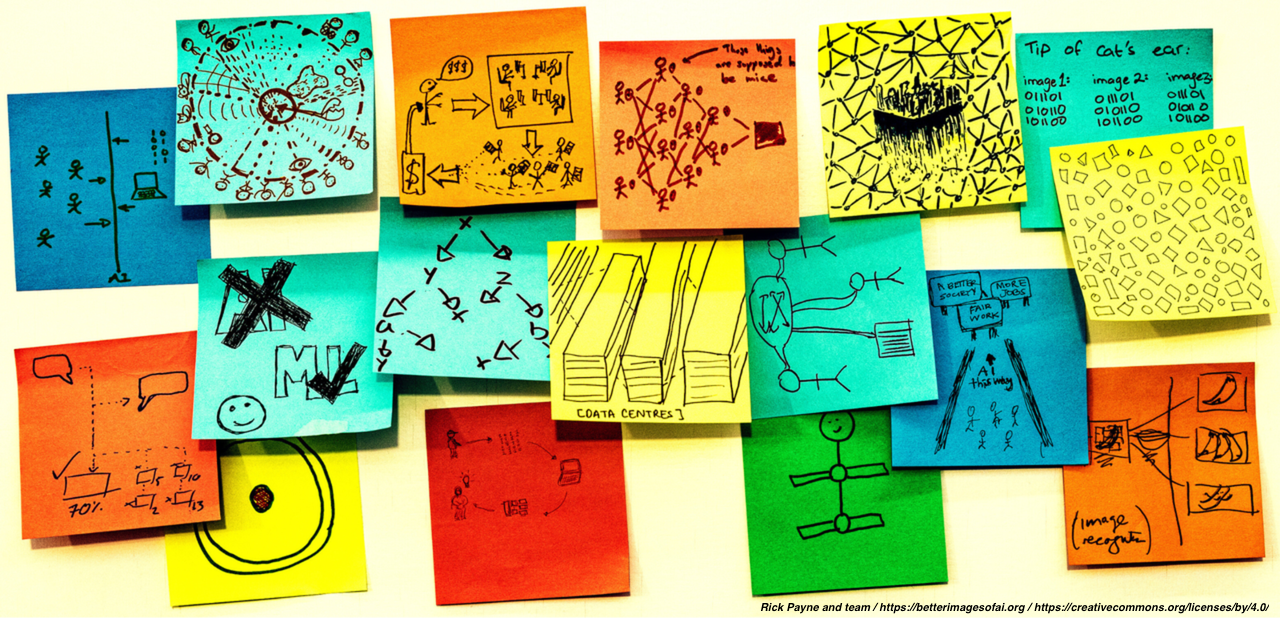
by Dr Stefanie Havelka, Assistant Professor, College of Social Sciences and Law/School of Information and Communication Studies, University College Dublin
AILiFE+ (Artificial Intelligence Literacy for Inclusion, Futures and Employment) is funded by Research Ireland and led by researchers at the School of Information and Communication Studies at UCD, in partnership with Independent Living Movement Ireland (ILMI). The project is led by Dr Stefanie Havelka, who has an acquired disability and lives with Primary Lateral Sclerosis, a rare motor neuron disease. By combining academic expertise with lived experience, AILiFE+ bridges research and reality. Its goal is to co-design practical workshops and rights-based, accessible digital education grounded in disabled people’s perspectives, priorities, and needs, with a focus on enhancing workforce readiness through AI literacy.
To understand why this matters, it helps to clarify what AI actually is. AI is more than just ChatGPT. It includes several technologies such as:
- Machine Learning: systems that learn from data patterns without being directly programmed
- Deep Learning: advanced neural networks that handle complex recognition tasks
- Natural Language Processing: technology that helps computers understand and generate human language
- Robotics: machines that use AI to make decisions and act in the physical world
These technologies increasingly shape recruitment, education, healthcare, and public services. As a result, AI literacy is becoming essential for participation in society. However, most existing AI literacy frameworks, and the AI arms race more broadly, do not take into account the experiences, access needs, and rights of disabled people. They are often designed for a presumed ‘average’ user, leaving significant gaps in accessibility, representation and relevance.
AILiFE+ stands out because it takes a participatory approach. Instead of treating disabled people as research subjects, the project involves them as co-designers, co-investigators and knowledge holders. In doing so, those most affected by digital barriers help shape meaningful and practical solutions.
AI already offers powerful tools that are changing the lives of disabled people. For example:
- Better assistive technology: smart prosthetics powered by machine learning, real-time sign language translation using natural language processing, and instant image descriptions generated through computer vision
- Easier communication: voice-to-text and text-to-voice tools that support people with speech or hearing differences
- Daily independence: smart home systems and AI-powered cognitive apps that assist with routines and navigation
These examples highlight AI’s potential to increase independence, participation and opportunity. New applications are emerging across healthcare, education and workplace accessibility.
However, AI also brings serious risks that must be addressed. For instance:
- Algorithmic Bias: systems trained on ‘average’ data may fail to recognise non-standard speech, facial differences or diverse body movements
- Unfair Screening: AI used in hiring or insurance can misinterpret disabled candidates or wrongly deny welfare benefits due to automated errors
- Inaccessible Design: many AI products are released without input from disabled users and may not function with screen readers or alternative controllers
- Data Exclusion: Computer vision systems trained on limited datasets can disadvantage those who fall outside narrow norms
As AI evolves, new risks and unintended consequences will likely emerge. Without critical engagement, existing inequalities could be reinforced.