Sometimes we all need a little help navigating today’s rapidly evolving digital information ecosystem. This can be especially true when we are responsible for the online experiences of family members too.
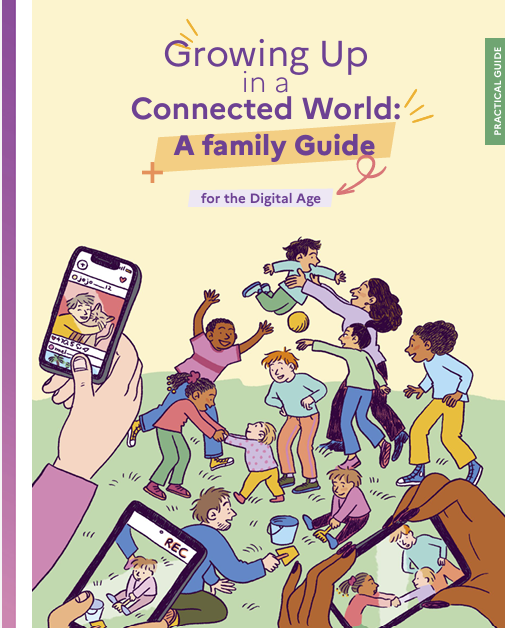
A newly published, flagship, global resource by UNESCO in partnership with the French Media and Information Centre (CLEMI / Réseau Canopé), reassuringly opens with the sentence ‘Parents, you are not alone!’
This comprehensive resource offers practical advice on how to protect children’s rights to information and free expression while ensuring they are equipped with the necessary skills to engage safely and critically with digital content.
The guide emphasises the importance of media and information literacy and provides families and care-givers with the tools to assess the credibility of information, identify misinformation and foster open dialogue. It also addresses the challenges posed by the digital divide and the need for families to set healthy digital practices and communicate openly about these issues.
Resource Overview
Chapter 1 deals with screen time and explores themes like finding the right balance, reconnecting with children and best practice recommendations from the World Health Organisation.
Learning to find information and develop critical thinking is the focus of Chapter 2. It deals with combatting disinformation by breaking down filter bubbles and echo chambers and helping children cope with conflict images and emotional manipulation online. Combatting information manipulation as a family is also tackled in this chapter as well as how to stay informed in the age of generative AI.
Growing up safely with social media and AI is covered in Chapter 3 and deals with algorithms and the challenges of growing up in a world dictated by ‘likes’. This chapter also discusses the topical issue of social media and the mental health of adolescents. Regulation and what governments are doing to strengthen online safety for children is also explored in this chapter.
Chapter 4, which deals with the spectre of cyberbullying, explores how parents can protect their children and provides an emergency kit in the event of an image-related incident. This chapter also deals with protecting children from online paedophilia and what parents need to know about parental controls.
The final chapter is full of practical advice like ten things you need to know before giving your child their first smartphone and how to support teenagers’ digital autonomy and protect children digital rights.
The guide is available in English, French and Spanish.
Download the English version here: EN – Family Guide.pdf