by Ligimat Pérez, Media Literacy and User Education team, Coimisiún na Meán
The Digital News Report Ireland 2026, launched by Coimisiún na Meán in collaboration with the Reuters Institute for the Study of Journalism, provides a detailed look at how people in Ireland access, use and engage with news, and the level of trust they place in what they read, watch and listen to.
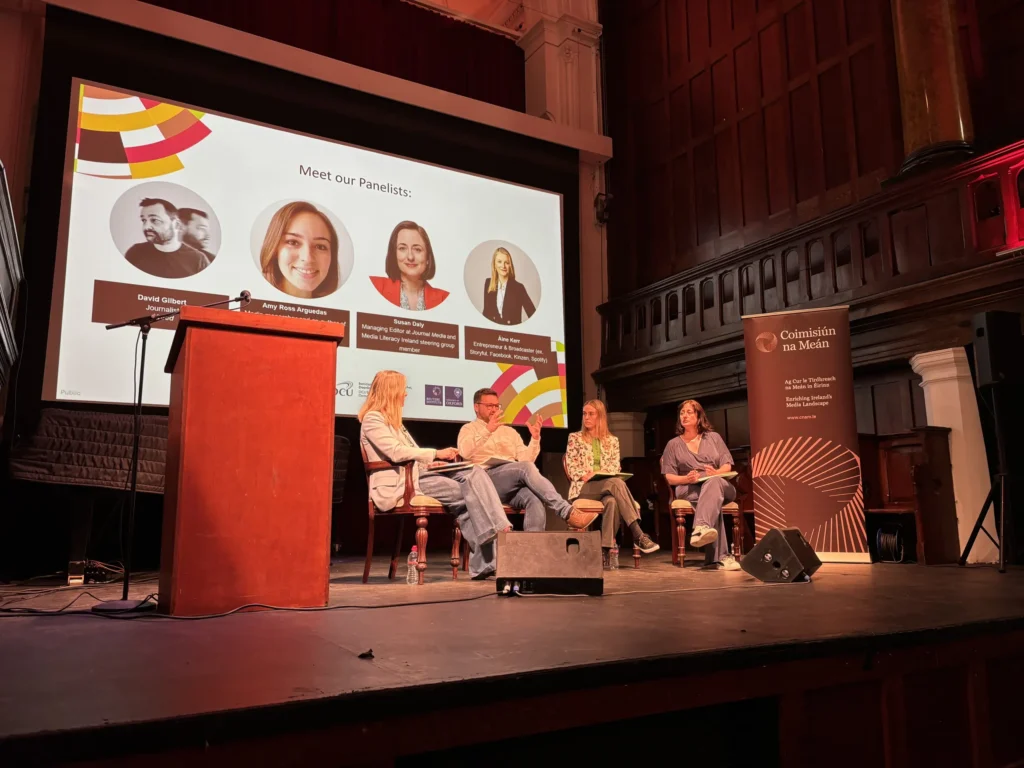
Part of a global study, the findings were presented on 16 June at a launch event in Cork, where media professionals and researchers gathered to discuss their implications. A panel featuring David Gilbert (Wired), Amy Ross Arguedas (Reuters Institute), and Susan Daly (Journal Media) explored changing media habits, the influence of digital platforms, and the growing role of AI in shaping how people experience news.
One of the key findings is the growing difficulty in distinguishing what is real and fake online, with 71% of people expressing concern about navigating digital content. This highlights the importance of media literacy in supporting individuals to critically assess information, recognise misinformation, and engage safely with digital media.
The study also explored:
People’s trust in the news. 42% of people in Ireland trust most news most of the time, down from 50% in 2025. This decline is more noticeable among younger audiences. However, overall trust in Ireland remains higher than in the EU (36%), the UK (31%), and the US (26%).
Where they get their news from. Online sources now rival television as the main source of news. While 31% of people say television is their main source, most younger adults (particularly those aged 18–24) obtain their news on social media, with many also turning to influencers and chatbots. Despite this shift, trust in these sources is low, with only 16% trusting news on social media and 14% trusting news from chatbots.
Traditional media versus social media. People in Ireland continue to trust established news brands such as RTÉ News, local radio and regional newspapers, over social media, which highlights the ongoing importance of traditional journalism.
Interest in news. Almost half of the people said that they actively try to avoid news. However, 54% say that they are extremely or very interested in news, which is higher than the EU (44%) and UK (37%) averages.
At the same time, the report highlights encouraging signs of resilience in the Irish media landscape. Trust in established outlets such as RTÉ News and local radio remains strong, while public service media continues to be widely valued. There is also evidence of willingness to pay for quality journalism, with news subscriptions at 22%.
Research for the annual Digital News Report is undertaken by the Reuters Institute for the Study of Journalism at the University of Oxford and analysis of the Irish data is provided by the DCU Institute for Future Media, Democracy and Society (FuJo).
The Digital News Report Ireland 2026 can be found on the Coimisiún na Meán website here.